
Navigating Andropause: Understanding Male Menopause
Health, Wellness & Aesthetics
While much has been written about menopause in women, its male counterpart—andropause—is often misunderstood, overlooked, or even dismissed entirely. Yet many men experience a gradual decline in hormones that significantly impacts their health, wellbeing, and relationships. From fatigue to weight gain, low libido, and mood changes, andropause can be a frustrating and confusing period of life.
The good news? You’re not alone, and you’re not helpless. In this blog, we explore what andropause is, the symptoms men typically experience, and what treatment options are available to support your health and vitality as you age.
What is Andropause?
Andropause, also referred to as testosterone deficiency syndrome (TDS) or late-onset hypogonadism, is a condition associated with a gradual decline in testosterone levels in men, usually beginning in their late 30s or 40s and becoming more noticeable after age 50.
Unlike menopause, which is a clearly defined event, andropause happens more slowly and subtly. Testosterone levels decline at a rate of approximately 1% per year after the age of 30, but not every man will develop symptoms. Those who do may experience significant changes in physical, mental, and emotional wellbeing. Andropause is oten misdiagnosed as Depression in males as the symptoms commony overlap. For this reason it is crucial to sonult with a doctor to identify the source of these untoward symptoms.
Symptoms of Andropause
While symptoms can vary, the most commonly reported include:
- Fatigue and reduced energy
- Decreased libido and sexual performance
- Mood changes: irritability, depression, or anxiety
- Reduced muscle mass and increased body fat, especially around the abdomen
- Poor concentration or memory (brain fog)
- Sleep disturbances
- Decreased motivation or self-confidence
- Erectile dysfunction
- Osteoporosis or decreased bone density in advanced cases
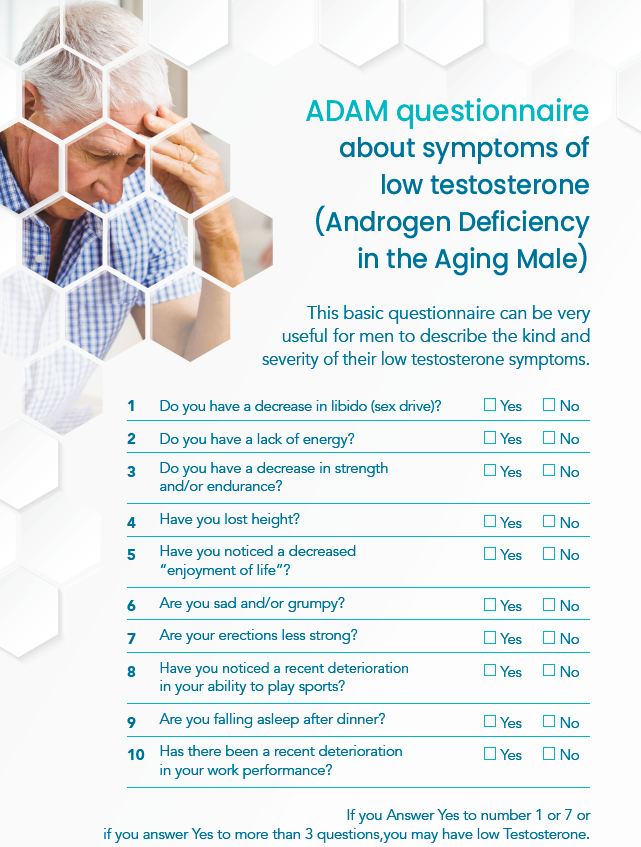
It’s important to note that many of these symptoms are non-specific and may overlap with other conditions such as thyroid dysfunction, stress, or chronic illness. A thorough medical evaluation is essential. One screening tool we recommend prior to visiting our doctors is to complete the A.D.A.M. questionnaire. This provides some insight into your symptoms. You will find the full questionnaire at the end of this blogpost.
What Causes It?
The main culprit is a decline in testosterone, the primary male sex hormone. Testosterone is responsible for regulating libido, muscle and bone mass, fat distribution, and mood. The decline is usually due to the natural ageing process but can be due to chronic illness such as diabetes and obesity, excessive alcohol use, stress and stress related disorders, medications such as opioids and steroids or finally due to underlying pituitary or testicular disorders.
What happens if left untreated?
Sadly, this is the case for most sufferers of Andropause. Due to the lack of information and awareness regarding the condition, most patients suffer a steady and progressive decline in their health, as they are left undiagnosed and untreated. Low testosterone levels eventually leads to progressive muscle loss and associated weakness, increased abdominal fat, emotional instability and clinical depression, as well as diminished sexual satisfaction and desire leading to relationship strain.
The good news is that effective, individualised treatment can restore hormonal balance and dramatically improve quality of life. All of the above symptoms are treatable and reversible!
Treatment Options
At Medihub, we take a holistic, evidence-based approach to managing andropause. Your journey begins with a comprehensive medical history, blood testing, and symptom evaluation. Treatment is personalised to suit your needs and health goals. Below is an overview of commonly used interventions. This is not be considered as an extensive list but is a rough guide to common treatments available:
Lifestyle Modifications
What it is: Diet, exercise, sleep hygiene, stress reduction.
Benefits: Regular strength training and a high-protein diet can naturally boost testosterone. Quality sleep and stress management are crucial for hormonal health.
Contraindications: None—but requires commitment and consistency.
Ashwagandha & Tongkat Ali
What they are: Adaptogenic herbs known to support testosterone production and stress resilience.
Benefits: May improve libido, energy, and reduce cortisol (the stress hormone).
Contraindications: Use with caution in those with thyroid issues, hypertension, or prostate concerns. Always consult your doctor first.
Melatonin
What it is: A natural hormone regulating sleep cycles.
Benefits: Enhances sleep quality, which supports testosterone production and mood.
Contraindications: Autoimmune diseases, depression, or interactions with anticoagulants.
Testosterone Replacement Therapy (TRT)
What it is: Administration of testosterone via injection, patch, gel, or implant.
Benefits: Can improve libido, mood, energy, muscle mass, and bone density in men with clinically low testosterone.
Contraindications:
- History of prostate or breast cancer
- Severe sleep apnoea
- Uncontrolled heart failure
- Polycythaemia (elevated red blood cell count)
- Fertility concerns (TRT suppresses sperm production)
Important: TRT requires careful monitoring of blood testosterone levels, prostate health, and blood counts. This is not to be confused with the illegal and dangerous compounds available at gyms.
Final Thoughts
Andropause is real—and more common than many think. It is not a failure of masculinity or strength, but rather a biological shift that deserves understanding and support. With the right approach, men can regain vitality, restore intimacy, and thrive in this new stage of life.
If you or a loved one are noticing the signs of andropause, don’t suffer in silence. Book a consultation with our team at Medihub. We’re here to help you take back control—because ageing shouldn’t mean losing your edge.
ADAM Questionnaire: